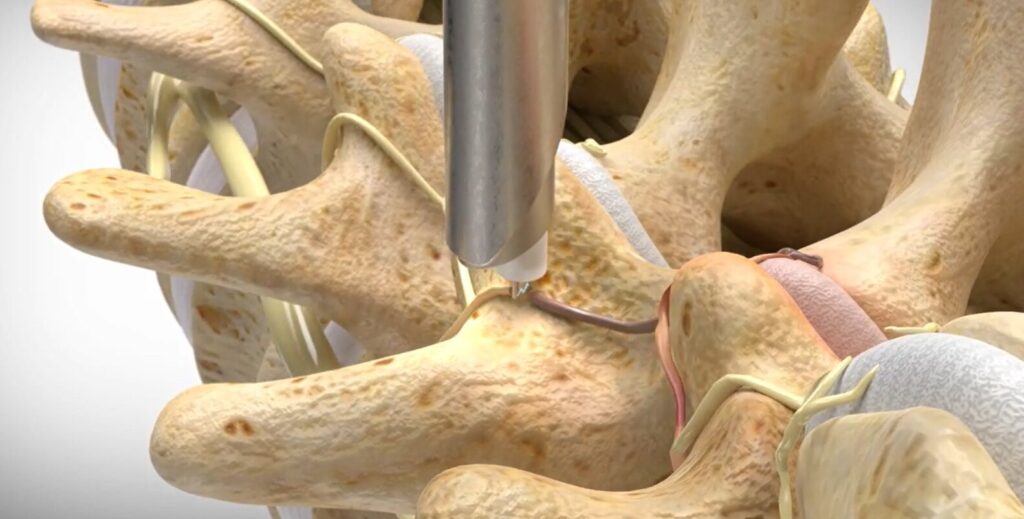
Endoscopic rhizotomy is an outpatient procedure that treats chronic facet joint pain by interrupting the medial branch nerves carrying the pain signal. Through a small incision, an endoscope with a camera lets the physician see the nerve directly before treating it, which separates it from radiofrequency ablation, where the nerve is targeted using X-ray guidance alone. It is performed under local anesthesia with mild sedation. Candidates usually have neck or low back pain lasting longer than six weeks, partial relief from a diagnostic medial branch block, or pain that returned after an earlier percutaneous rhizotomy. Spine Institute of North America (Spine INA) in East Brunswick, New Jersey performs endoscopic rhizotomy for confirmed facet-mediated pain.
What Is An Endoscopic Rhizotomy Procedure?
A rhizotomy targets specific nerves that carry pain signals. In an endoscopic rhizotomy, the focus is on the medial branch nerves connected to the facet joints.
This procedure is designed for appropriately selected patients with facet-related pain. Unlike other endoscopic spine procedures that may address different structures, endoscopic rhizotomy specifically targets nerves associated with facet joint pain.
Who Is A Candidate For Endoscopic Rhizotomy In New Jersey?
An interventional spine physician may consider endoscopic rhizotomy when pain originates from the facet joints and previous treatments have not provided enough relief. These treatments may include physical therapy, medication, or injections.
Depending on the source of pain, candidates may include patients with:
- Chronic lower back pain or muscle spasms associated with the facet joints.
- Facet joint arthritis, enlargement (hypertrophy), or injury.
- Failed back surgery syndrome, when persistent pain after surgery is linked to the facet joints.
- Facet-related pain following a whiplash injury.
A diagnostic medial branch block can help determine whether the nerves supplying the facet joints contribute to your symptoms. Your physician will review your symptoms, examination findings, and previous treatment results to determine whether endoscopic rhizotomy is appropriate.